
- articles brought over from WordPress in 2025, in French and English, with no loss of search rankings
- 130+
- autonomy for the marketing team since the April 2025 launch: it runs the website without a developer
- 100%
“Perfect collaboration with Croissant for our website. Pleasant interactions and record reaction time. Looking forward to working with this agency again!”
 Octavie GuillonProduct Designer @ Qovoltis
Context: a growing SME held back by its WordPress site
The company audits, installs, supervises and maintains charging stations for company fleets and hotels. After a funding round in late 2024, it was accelerating its growth across Europe.
Its WordPress website no longer kept up. It was slow, and a developer had to look after it constantly. The marketing team struggled to launch a campaign or update content on its own.
The Qovoltis team had designed the new website, and the Iytro agency had written its copy and SEO strategy. Iytro recommended us for the migration and Webflow development.
Goals: leave WordPress without losing anything, then hand control back to the team
The migration had to:
- Keep search rankings: every old address redirected to the new one.
- Bring over the content, in French and English.
- Make the team autonomous, with no developer needed to run the website.
- Speed up the website, which was slow on WordPress.
How we did it: from Qovoltis’s design to the Webflow website
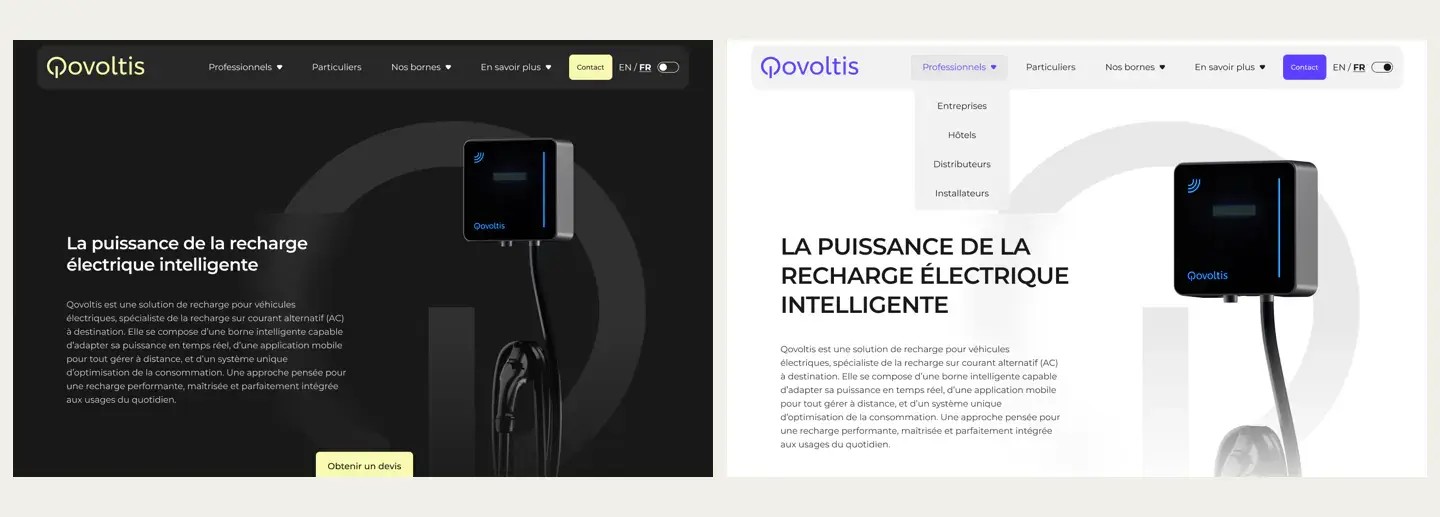
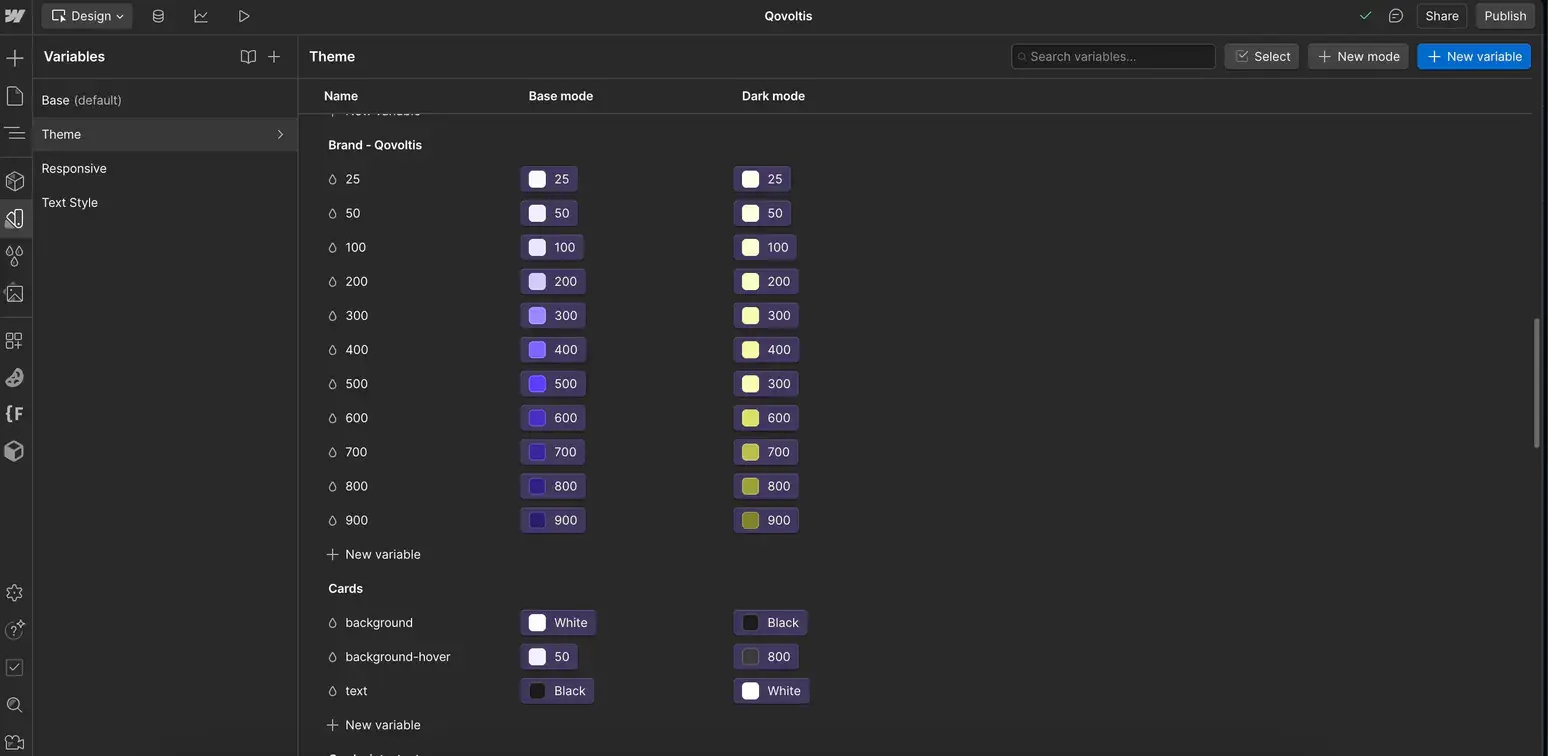
1. Qovoltis’s design, in light and dark mode
We built the Qovoltis team’s design, with its two themes. Light and dark mode run on Webflow variables: a colour changes in one place, and the whole website follows.
2. Ready-made blocks to create pages without a developer
The website is built with reusable components, following an organisation method well known among Webflow developers (Client First). To create a page, the team assembles ready-made sections, from templates prepared for landing pages. The CMS manages news, categories, clients and the FAQ, and forms are connected to HubSpot.
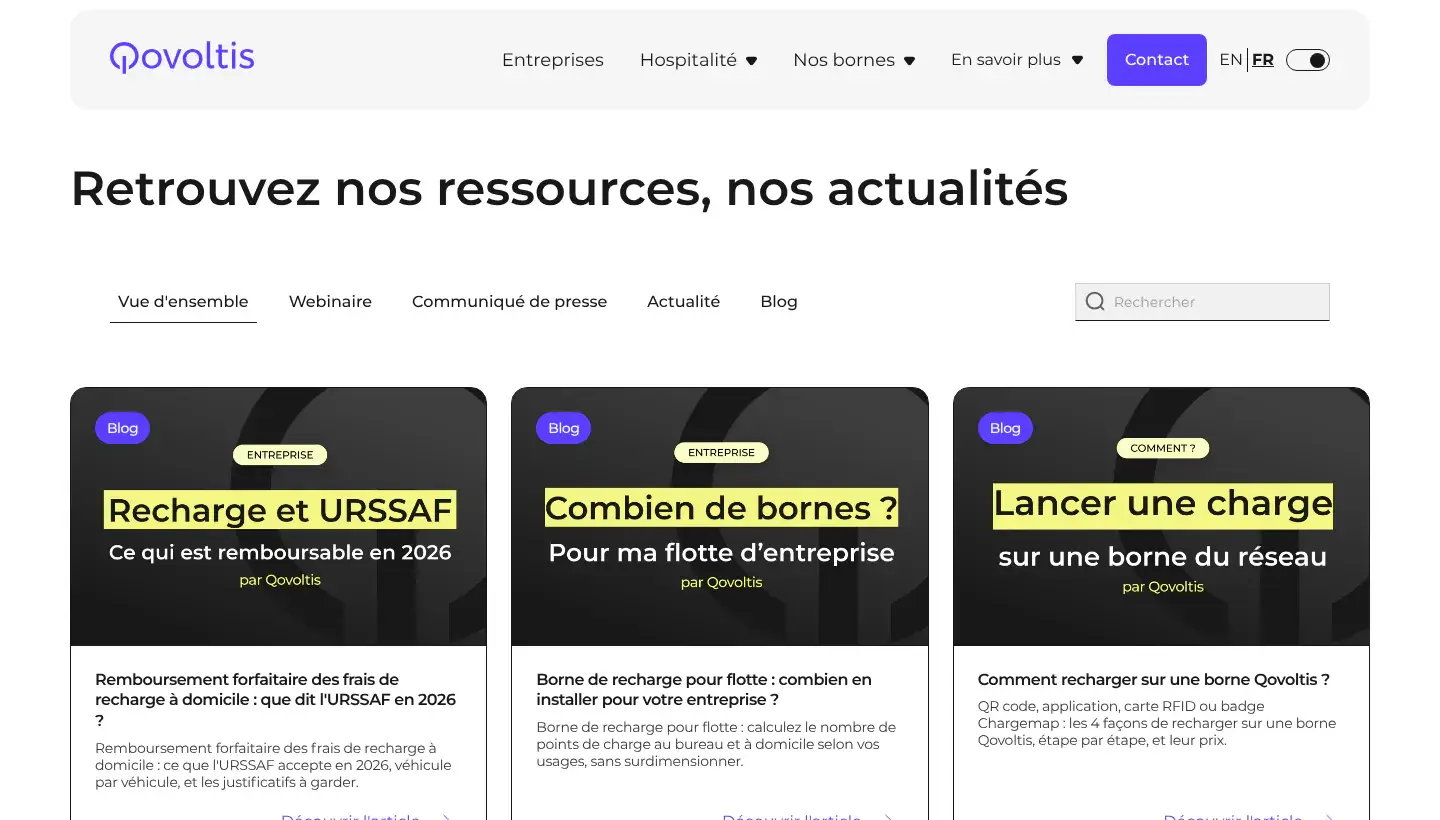
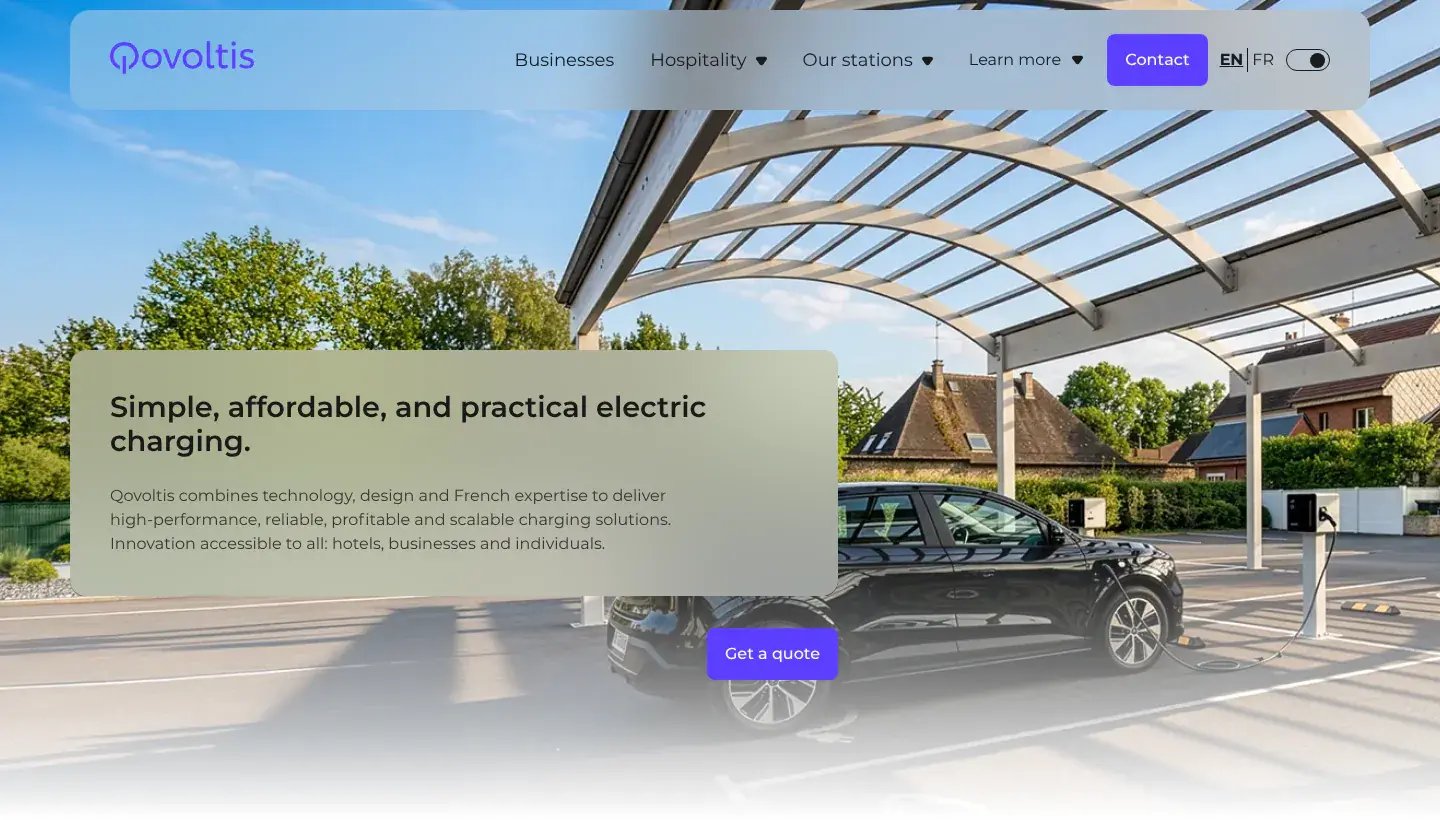
3. More than 130 articles migrated, in two languages
We brought the WordPress blog articles into the CMS, in French and English, with Webflow Localization. Overly long addresses were shortened, and every old address redirects to its new page. Broken links found in the audit were fixed.
4. A faster website, run by the team alone
The design came from the Qovoltis team: our work was the build. We complemented Iytro’s strategy with technical SEO (titles and metadata for every page, structured data, a 404 page) and worked on loading speed, one of the old website’s weak points.
| Measure | Before, on WordPress | After, on Webflow |
|---|---|---|
| Homepage PageSpeed score, desktop | 60 | 90 |
| Homepage PageSpeed score, mobile | 40 | 84 |
| Updating the website | A dedicated developer | The marketing team, on its own |
| Creating a page | Through the developer | Assembling ready-made blocks |
5. Training to run the website
The website went live on 7 April 2025, one month after the project started. On 9 April, we trained the team on Webflow live: editing a page, publishing, setting each page’s SEO, adding an article. A chaptered training video followed, for new team members.
Results: more than 130 articles migrated, an autonomous team
- More than 130 articles brought over, in French and English, with a redirect for every old address.
- No loss of search rankings during the migration.
- A mobile PageSpeed score of 84 for the homepage, against 40 on WordPress, and 90 on desktop, against 60.
- 100% autonomy: the team runs the website without a developer, from pages to articles.
- A website live in one month, with training two days later.
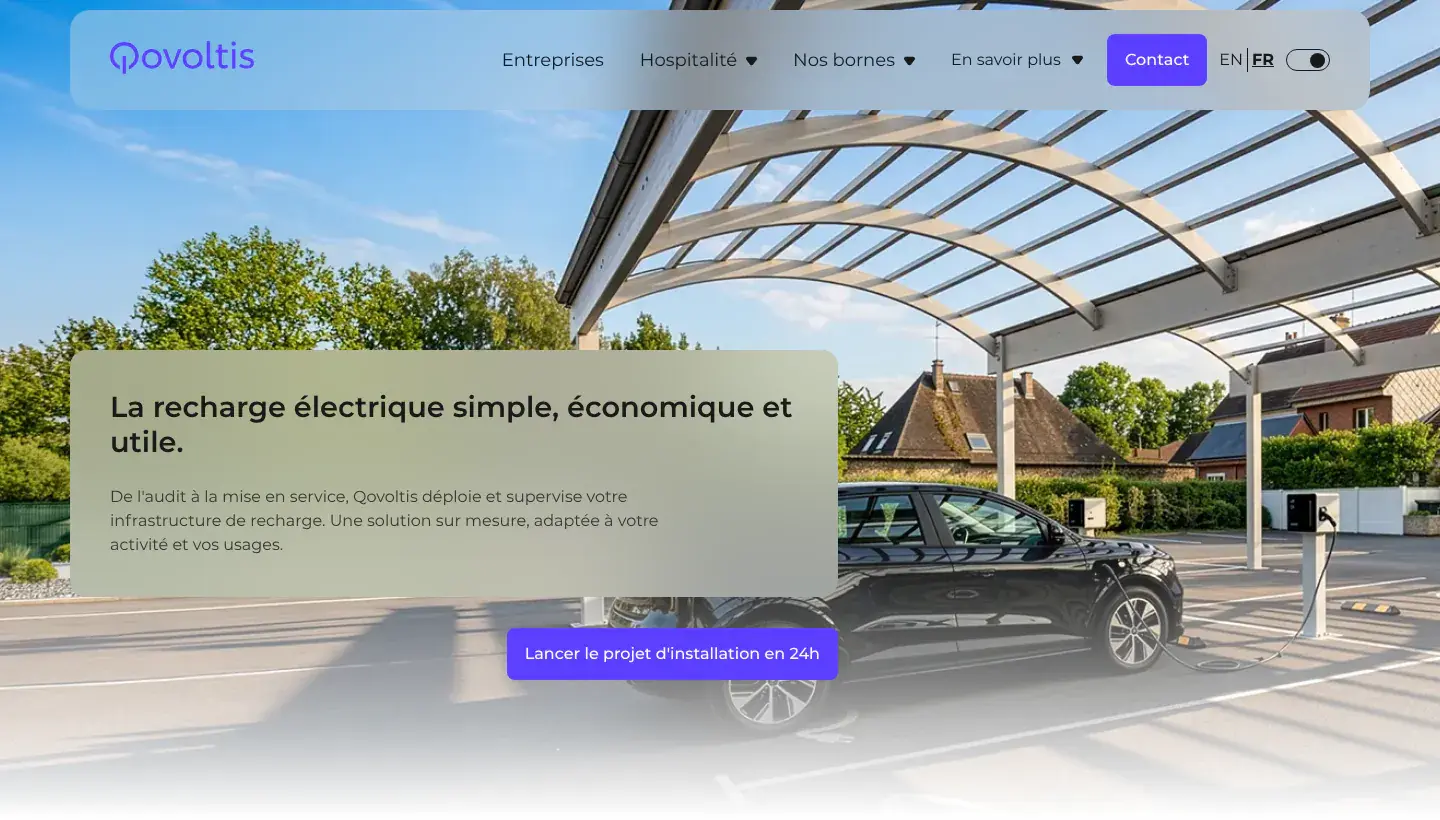
What’s next: an agent that answers visitors and reveals their questions
Since late August 2026, Jenna, our AI sales agent, has been answering visitors on the French Qovoltis website. For the team, its value lies first in customer insight: the conversations show what visitors are really looking for, and the team uses them to steer its search optimisation.
The Qovoltis team has already acted on it: a pricing page, articles written to answer the questions asked, outdated pages removed from Google. Since the pricing page, questions about the price per kWh have almost disappeared from the conversations.
Updated on 1/11/2026